

If you are dreaming of the top grade in Business Studies O Level, you are already thinking in the right direction. You have seen many capable students miss the A*, not because the subject was too hard, but because their preparation was scattered or too passive. Business Studies rewards smart strategy as much as hard work.
The good news is that score an A* in business studies O level is absolutely achievable with the right approach. In this article, you will know what actually works, what examiners look for, and how you can turn your effort into top marks so you can confidently score an A* in business studies O level
What the Examiner Really Wants
Before you start your revision, you need to understand something important. Business Studies is not about memorising definitions and hoping for the best. Examiners want to see application, analysis, and evaluation.
Many students know the content, but still lose marks because their answers are too basic. If you truly want to master score an A* in Business Studies O Level, start by studying the marking scheme. Notice how higher marks are awarded for:
- Clear application to the case
- Logical explanation
- Balanced evaluation
- Use of business terminology
- When you align your answers with these expectations, it becomes much easier to score an A* in business studies O level consistently.
Build a strong concept first
I always recommend starting with a deep understanding instead of quick memorisation. Business Studies is interconnected. Topics like marketing, finance, and operations often overlap in exam questions.
Go through your syllabus topic by topic and make sure you can explain each concept in simple words. If you cannot explain something clearly, you probably do not understand it well enough yet.
Focus especially on:
- Business objectives
- Marketing mix
- Break even analysis
- Cash flow
- Motivation theories
- Sources of finance
- Strong conceptual clarity creates the foundation you need to score an A* in business studies O level without confusion in the exam hall.
Use Active Revision Instead of Passive Reading
One of the biggest mistakes you see is students rereading the textbook again and again. It feels productive, but it is not very effective.
If you want to master Business Studies O Level revision, switch to active methods. After studying a topic, close the book and try to write everything you remember. Create mind maps. Teach the concept to a friend. Solve past questions without looking at notes.
Active recall strengthens memory and prepares you for real exam pressure. Students who consistently use these techniques are far more likely to score an A* in business studies O level* compared to those who only read notes.
Structure Your Answer
This is where many A-grade students fall short of an A*. Structure matters a lot in Business Studies.
For short questions, keep answers precise and use correct terminology. For longer questions, especially 6, 8, or 12 mark questions, your structure must be clear and logical.
A strong, high-scoring answer usually follows this flow:
First comes the point. Then you explain it. After that, you apply it to the case. Finally, you evaluate or give a justified conclusion if required.
When practising how to score an A* in Business Studies O Level, train yourself to automatically think in this pattern. This single habit can dramatically improve your ability to score an A in business studies O level.
Practice Past Papers Like an Exam
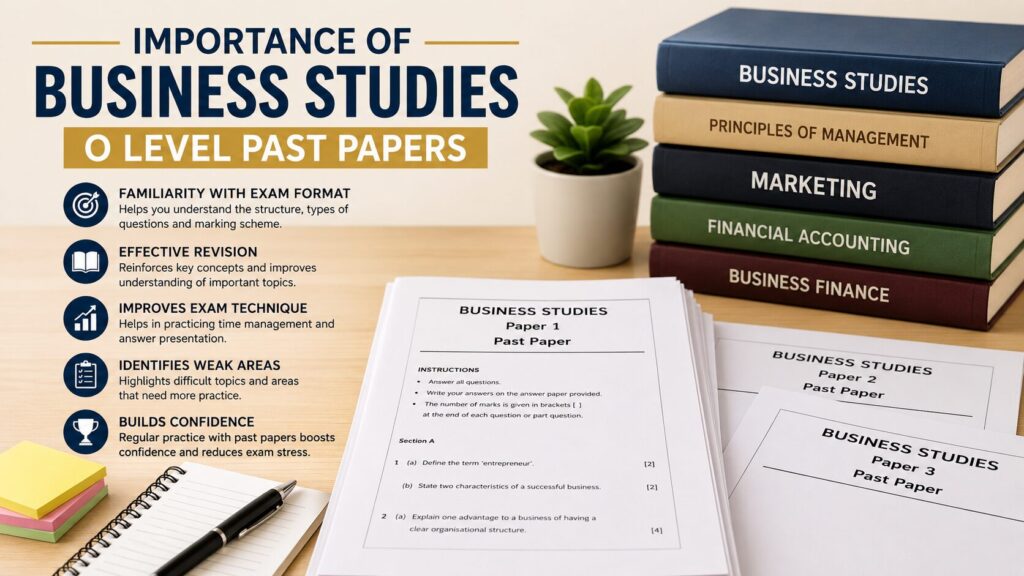
Past papers are not optional. They are essential.
But there is a right way to use them. Do not just read model answers. Sit down with a timer and attempt full papers under exam conditions. This builds speed, accuracy, and confidence.
After completing a paper:
- Check the marking scheme carefully
- Identify where you lost marks
- Rewrite weak answers
- Note common question patterns
- Consistent past paper practice is one of the fastest ways to score an A* in business studies O level because it trains you exactly for the real exam.
Focus on Application in Case Study Questions
Business Studies O Level exams love case-based questions. This is where many students either shine or struggle.
Examiners reward answers that clearly link theory to the business in question. Generic answers rarely get top marks.
For example, instead of writing:
“The business should use advertising to increase sales.”
A stronger answer would be:
“The business could use social media advertising to reach young customers mentioned in the case, which may increase sales revenue.”
This level of specificity shows examiners you understand the context. Mastering the application is a major step if your goal is to score an A in business studies O level*.
Strong Evaluation Skills
To reach A*, you must move beyond simple explanation. Evaluation is what separates top students.
Evaluation means weighing options, considering limitations, and giving justified judgement.
Whenever a question asks you to recommend, justify, or discuss, make sure you include a clear final judgement supported by reasoning. Strong evaluation significantly increases your chances to score an A* in business studies O level.
Manage Your Time in the Exam
Even well-prepared students sometimes drop marks because of poor time management.
During the exam:
- Do not spend too long on low-mark questions
- Keep an eye on the clock
- Leave a few minutes at the end to review
A useful habit during Business Studies exam strategy practice is timing each past paper strictly. Good pacing ensures you attempt every question fully and helps you score A in business study O level* without leaving marks behind.
Avoid Common Errors
From my experience reviewing student scripts, these mistakes appear again and again:
Writing definitions when the question asks for an explanation
Giving generic answers without case application
Ignoring command words like analyse or evaluate
Leaving conclusions weak or missing
Writing too little for high mark questions
Avoiding these simple errors can quickly improve your performance and move you closer to your goal to score an A* in business study O level.
Create a Revision Plan
Plan your revision over several weeks. Rotate topics regularly so nothing is neglected. Mix theory review with past paper practice.
A simple weekly cycle could include:
Early week for concept revision
Mid-week for topic questions
Weekend for the full past paper
Students who follow a structured routine are much more likely to score an A* in business study O level because their preparation stays balanced and focused.
Stay Calm and Compose
Finally, remember that Business Studies is about logical thinking. In the exam, pause for a moment and think practically about the business situation in the question.
Ask yourself:
What would make sense in real life
What problem is the business facing
Which option best fits the context
When you think this way, your answers naturally become more analytical and convincing, helping you confidently score an A in business studies O level.
Conclusion
Scoring the top grade is not about being naturally brilliant at Business Studies. It is about being strategic, consistent, and exam-aware. If you focus on concept clarity, active revision, strong answer structure, and regular past paper practice, you put yourself in a very strong position.
The students who truly master how to score an A* in business studies O Level are the ones who combine knowledge with smart exam technique. Stay consistent, keep practising, and refine your answers based on examiner expectations. Follow the strategies in this guide, and you will significantly improve your chances to score A in business studies O level.
Frequently asked questions
How many past papers should I practice for Business Studies O Level?
Ideally, you should complete at least five to ten full past papers under timed conditions. The more you practice, the more familiar you become with question patterns and marking expectations.
Is memorising definitions enough to get an A*?
No. Definitions alone usually earn only basic marks. To reach an A*, you must explain, apply to the case, and evaluate where required.
How important is the case study application?
It is extremely important. Examiners look for answers that clearly relate to the business in question. A strong application often makes the difference between an A and an A*.
What is the best way to revise Business Studies quickly?
Use active recall, practice past questions, and review weak areas. Passive reading is less effective than testing yourself regularly.
Can I score an A if I start serious preparation late?
Yes, but you need focused and disciplined study. Prioritise high-frequency topics, practice past papers daily, and work on answer structure to maximise your marks quickly.