
Quick answer
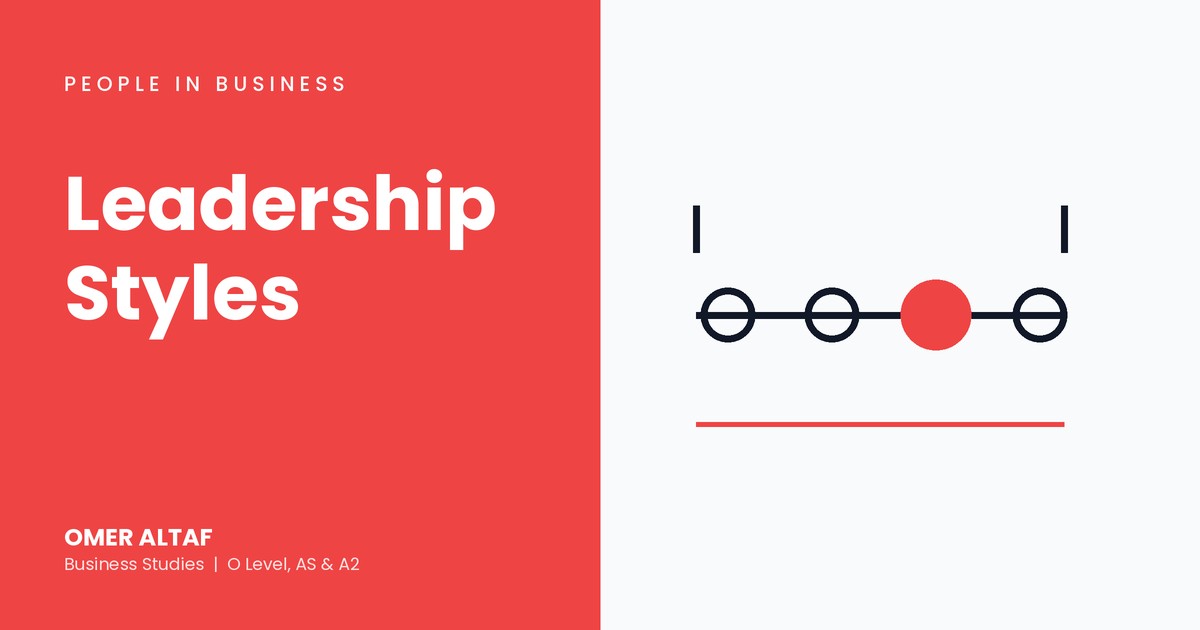
The four main leadership styles are autocratic (the leader decides), democratic (the leader consults), paternalistic (the leader decides with employees’ interests in mind) and laissez-faire (the leader delegates freely). No style is always best: the right one depends on the task, the urgency and the skills of the team.
The four styles
- Autocratic: the leader makes decisions alone and gives orders. Decisions are fast, but employees may feel unmotivated and ideas are lost.
- Democratic: the leader consults staff and may let them vote or contribute. Motivation and ideas improve, but decisions take longer.
- Paternalistic: the leader decides but explains the reasons and considers employee welfare. It can build loyalty, but employees may still feel they have little say.
- Laissez-faire: the leader sets goals and then leaves staff to get on with it. It suits skilled, self-motivated teams, but can lack direction and coordination.
When does each style work best?
| Situation | Likely best style |
|---|---|
| Emergency or tight deadline | Autocratic |
| Complex problem needing ideas | Democratic |
| Inexperienced team needing support | Paternalistic |
| Highly skilled creative team | Laissez-faire |
Link leadership to motivation
Leadership style affects motivation, which affects productivity and staff turnover. Connect this topic with our guide to motivation theories. For example, a democratic style supports the higher-level needs in Maslow’s hierarchy, while strict autocratic control can weaken them.
Evaluation: what to write
Do not say that one style is best. Instead:
- State the situation in the case (size, urgency, skills, culture).
- Explain the benefit and cost of the style in that situation.
- Make a judgement and say what would change your answer, for example if the business grows or deadlines tighten.
Practice
Try applying each style to a small business you know, then write a three-sentence recommendation. For more examples, see the notes library and the O Level course or AS Level course.
Related reading
- Motivation theories: Maslow, Herzberg, Taylor and Mayo
- Business Studies notes library
- O Level course with Omer Altaf
- AS Level Business Studies course
Learn Business Studies with Sir Omer Altaf
O Level, AS Level and A2 Level classes, online across Pakistan or on campus in Karachi. See the course options or contact the team.
Frequently asked questions
What is the difference between autocratic and democratic leadership?
An autocratic leader makes decisions without consulting staff, while a democratic leader involves employees in decisions.
Which leadership style is best?
There is no single best style. The right choice depends on the task, time available and the skills and motivation of the team.
What is paternalistic leadership?
A paternalistic leader makes the decisions but explains them and considers the welfare of employees, similar to a parent.
When is laissez-faire leadership suitable?
It suits experienced, self-motivated and skilled teams that can work with little supervision.